Pests and Nutrient Deficiencies
Spot the symptoms early: pests, fungal diseases and nutrient deficiencies when growing cannabis.
Quick overview
| Problem | Type | Frequency | Where to look first |
|---|---|---|---|
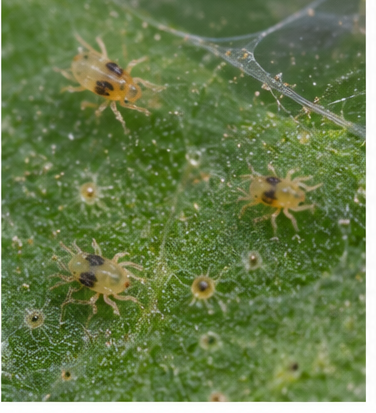 Two-spotted spider mite Two-spotted spider mite |
Animal pest | Very common | Leaf undersides, shoot tips |
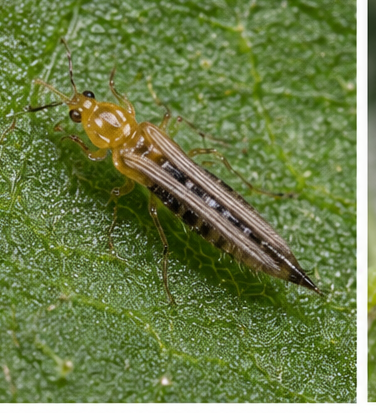 Thrips Thrips |
Animal pest | Very common | Young leaves, leaf surface |
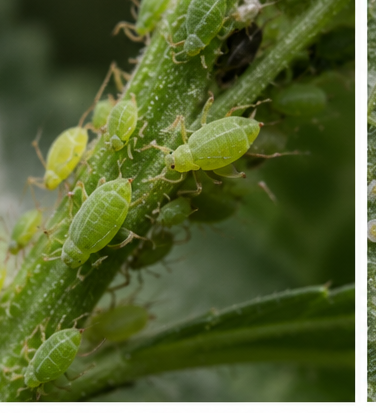 Aphids Aphids |
Animal pest | Common | Young shoots, leaf undersides |
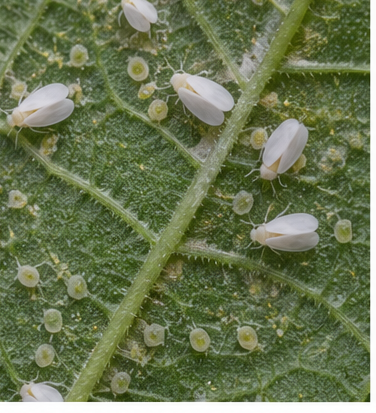 Whitefly Whitefly |
Animal pest | Common | Leaf undersides |
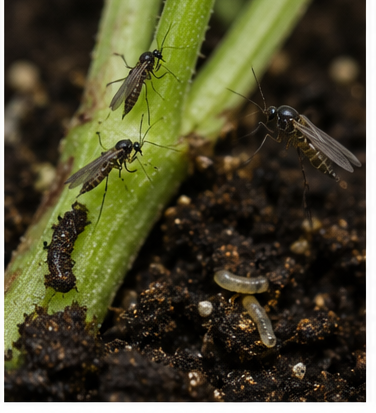 Fungus gnats Fungus gnats |
Animal pest | Common | Surface of the growing medium |
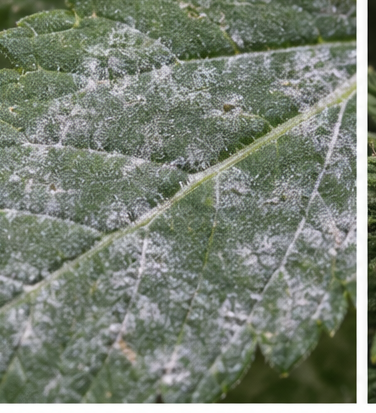 Powdery mildew Powdery mildew |
Fungal disease | Very common | Leaf surface |
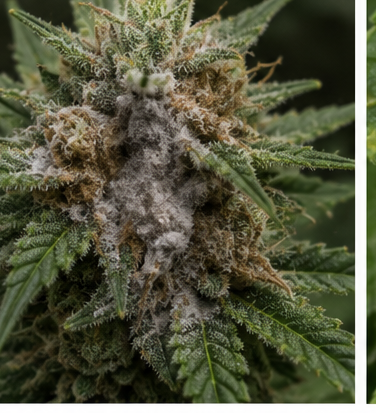 Botrytis Botrytis |
Fungal disease | Very common | Inside dense buds |
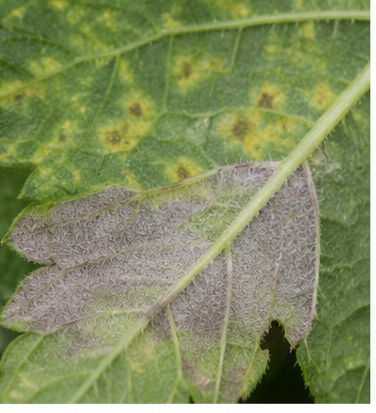 Downy mildew Downy mildew |
Fungal disease | Less common | Upper and lower leaf surfaces |
SHIVA Surface Cleaner: the "Plant care – leaf wash" sections above describe only the role of regular leaf washing with SHIVA Surface Cleaner. Leaf washing is a care routine that helps keep plant surfaces clean – it does not replace an accurate diagnosis and should not be regarded as a sufficient solution on its own against any pest or disease. On flowering plants, avoid soaking dense buds for long periods; after washing, the surface must dry completely.
In indoor cannabis growing, the enclosed environment can encourage some pests to multiply quickly and certain fungal diseases to develop. Early detection requires regular checks of the upper and lower leaf surfaces, the young shoots and the buds.
Tetranychus urticae
One of the most common indoor pests. It multiplies quickly in warm, dry conditions and can damage a large leaf area in a short time.
Frankliniella occidentalis and other Thripidae species
Tiny, fast-moving insects. By damaging the surface cells of the leaf, they leave characteristic silvery scars and streaks.
Aphididae
Fast-breeding, colony-forming sap-sucking pests that appear mainly on young shoots and the undersides of leaves.
Trialeurodes vaporariorum and Bemisia tabaci
Tiny sap-sucking insects with white wings. The adults often fly up when the plant is moved, while their immature stages are found on the leaf undersides.
Bradysia spp. and other Sciaridae species
The adults are tiny dark flies that usually fly around moist growing media. The larvae develop in the medium.
Golovinomyces spp. and other powdery mildew fungi
An easily recognisable fungal disease that develops on the leaf surface. At first, small white spots appear, which can later merge into a continuous coating.
Botrytis cinerea
One of the most significant fungal diseases of flowering cannabis. It often starts inside dense buds, so it is hard to spot at first.
Peronospora, Pseudoperonospora and Plasmopara spp.
Less common in indoor cannabis, but downy mildew-like symptoms can develop when the leaf surface stays wet and humidity is high.
Plants need micro- and macronutrients in small amounts, but a deficiency can cause serious yield losses. Recognising the visual symptoms is key to acting early.
Nitrogen
A main component of chlorophyll and proteins. Stimulates vigorous leaf and shoot growth. Crucial in the vegetative stage.
Phosphorus
Root development, flowering and energy transfer (ATP). Critical during flowering and fruit set.
Potassium
Water and nutrient transport, turgor, disease resistance. Especially important in the final stage.
Calcium
Cell wall formation, root growth, nutrient uptake. Immobile in the plant – needs a continuous supply.
Magnesium
The centre of the chlorophyll molecule. Supports photosynthesis, enzyme activity and phosphorus uptake.
Sulphur
A building block of amino acids and proteins. Enzyme activator, supports terpene production.
Iron
Chlorophyll synthesis, nitrogen fixation, enzyme component. EDDHA chelate is insensitive to pH.
Manganese
Chlorophyll synthesis, vitamin C and nitrogen metabolism. More mobile in acidic soil.
Zinc
Component of enzyme systems, protein synthesis, production of growth hormones.
Copper
Reproduction, enzyme activity, chlorophyll synthesis. Supports root development and protein utilisation.
Boron
Cell membranes, root and shoot growth, sugar transport. Critical during fruit set.
Molybdenum
Nitrogen metabolism, protein synthesis, conversion of inorganic phosphates into organic forms.
Plants obtain carbon, hydrogen and oxygen from the air and water – these make up most of the plant's biomass. Alongside the 13 nutrients, they are also essential.
The SHIVA solution: SHIVA Boost, Grow and Bloom contain a chelated micronutrient package, and Grow and Bloom also contain added EDDHA iron – the chelated fraction is stable between pH 3 and 9 and immediately available. If you see deficiency symptoms, always check the pH first!